Tesla has reached the part of the robot story where the machine comes off a production line. Next comes the awkward conversation about what it can actually do all day.
That deserves attention. A humanoid that can be manufactured consistently is a more consequential proposition than a prototype with excellent stage presence. It also needs to survive an encounter with the purchasing department.
The purchasing department rarely applauds. It asks about maintenance.
What Tesla Actually Announced
In its October 21 quarterly update, Tesla says Optimus production has started on its Fremont lines. The company describes the resulting machines as its first production-quality robots and says the manufacturing process is suitable for a commercial product, while acknowledging further hardware and process changes.
Its capacity table labels California Optimus operations an early ramp and Texas construction. It does not supply an Optimus production volume there.
That is the factual center of this update: Tesla reports progress in making the machine. The manufacturing description alone does not establish how economically it works for a customer.
A Factory Needs a Shift, Not a Highlight Reel
The question for a buyer is wonderfully unromantic: what useful work gets finished after every cost is counted?
Imagine a robot assigned to move parts between stations. The task sounds simple until a container arrives in the wrong position, a component slips, or another worker blocks the route. A practical assessment must include the exceptions rather than editing them out.
The buyer should ask:
- How many acceptable tasks does it complete per hour?
- How often does someone intervene, remotely or in person?
- How much time disappears into charging, maintenance and resets?
- What happens when something unexpected enters its workspace?
- Does the resulting cost beat a simpler machine or a redesigned process?
These are proposed evaluation criteria, not published Optimus results. Tesla's announcement should prompt the questions. It cannot substitute for the answers.
A robot that needs a human shadow may still be useful during development. A customer deserves to know whether the shadow is included in the price.
The future may arrive on two legs. Its performance review will happen in a spreadsheet.
The Strongest Case for Building Early
There is a credible argument for Tesla's sequence. Manufacturing and capability do not have to mature in single file.
Building more machines could expose component weaknesses, provide training opportunities and make designs easier to repair. Repeated production might teach engineers things that another elegant prototype never would. Waiting for perfect intelligence before learning how to manufacture could become its own expensive mistake.
That is the strongest challenge to skepticism about early production: a production line can be part of the experiment.
Our analysis is that this makes the milestone meaningful without settling the commercial question. The test is whether the experiment produces measurable improvements in useful work, rather than simply a larger collection of machines awaiting a breakthrough.
You can build the classroom before every student graduates. You still need to check whether anyone has learned plumbing.
The Competition Includes a Conveyor Belt
Humanoid robots are usually compared with humans or other humanoids. Buyers should widen the frame.
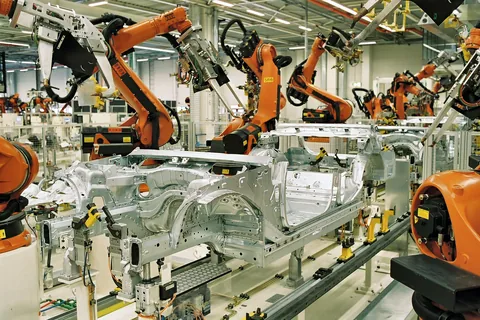
For a specific task, the alternative might be a fixed robotic arm, a cart, a conveyor, better packaging or changing the layout so the awkward movement disappears. The relevant comparison is the cheapest dependable way to achieve the result.
A human-shaped machine could become attractive when flexibility matters: several tasks, changing surroundings, equipment designed around human bodies. That advantage has to earn its keep against added complexity.
The interesting commercial possibility is therefore selective deployment. A robot might justify itself in a narrow, repetitive assignment long before it can manage a household. It does not have to conquer the kitchen to deserve a place in a factory.
What Would Change the Story?
The next useful disclosure would connect hardware to an identifiable task and a measurable outcome.
Look for:
- A defined job, with the operating conditions disclosed.
- Results over sustained use, including failures and interventions.
- Total cost, including integration, support and downtime.
- Evidence from a customer or independently observed deployment.
A successful example would justify a stronger conclusion. Poor economics or continuing dependence on intensive assistance would justify a narrower one. Either finding would tell us more than a production target alone.
AI is becoming software that acts. Robotics adds a particularly demanding condition: the action must survive contact with physical reality.
The future may arrive on two legs. Its first serious performance review will probably happen in a spreadsheet.
Frequently Asked Questions
Has Tesla announced a manufacturing milestone?
Yes. Tesla's quarterly update reports the start of Optimus production in Fremont. That is an attributed company announcement.
Does this establish that Optimus can replace a worker?
No. That requires evidence about a particular job, reliability, assistance and total operating cost.
Must a robot be generally intelligent to have commercial value?
No. A narrow assignment could be valuable if the machine performs it dependably at a competitive total cost.
Sources and Methodology
Evidence reviewed October 22, 2026. Analysis of primary documentation; company performance claims are attributed. No independent product testing.