What Changed in Artificial Intelligence?
For the first phase of the generative AI boom, the ritual was simple. A person typed something into a box. The machine replied. Sometimes the answer was useful. Sometimes it was confidently wrong. Either way, a human still decided what happened next.
That arrangement is changing. Developers are connecting models to web search, files, code environments, browsers and other software tools. The model still generates an output, but the surrounding system can use that output to choose and carry out another step.
This is the distinction that matters. A chatbot can tell you how to update a customer record. A tool-using system may be authorized to open the software and update it. The model did not wake up. It got permissions.
What “AI” Means in This Guide
- We are focused on generative and multimodal models.
- Conventional machine learning remains important.
- Here, “agent” means a tool-using system that can pursue a goal through more than one step with some degree of independence.
The consequential transition is not simply from less intelligent software to more intelligent software. It is from generated answers to authorized actions.
How Does an AI System Become an Agent?
“Agent” is an elastic industry term. It can describe anything from a chatbot with a search button to software that plans, acts, checks the result and tries again. A practical definition is more useful: an AI agent is a system that can pursue a goal by selecting and carrying out actions with some degree of independence.
- ModelInterprets information and proposes a next step.Supplies generation and decision-making.
- GoalDefines the desired outcome.Directs the sequence of work.
- ToolsSearch, calculate, retrieve or operate software.Convert output into action.
- MemoryPreserves relevant context across steps.Supports continuity and adaptation.
- FeedbackReports what happened after an action.Allows correction and another attempt.
- PermissionsLimit what the system can read or change.Define the practical risk boundary.
- OversightApproves, monitors or interrupts activity.Keeps accountability visible.
From Goal to Consequence
- Human sets a goal
- AI interprets it
- System chooses a tool
- Tool takes an action
- Result feeds the next decision
Agency emerges from the loop around the model. A vague goal, wrong interpretation, excessive permission or incomplete result can send the next step in the wrong direction.
What Can Today’s Systems Actually Do?
Tool-connected systems can search and compare information, retrieve documents, generate and inspect code, operate browser interfaces and coordinate routine digital workflows. These capabilities are real, but they are not universal and they are not uniformly reliable.
OpenAI has documented agent tools for web search, file search and computer use. Its published evaluations showed a large gap between success in some web tasks and performance on broader computer-use tasks. Independent evaluator METR measures a similar boundary through the length of tasks frontier systems can complete at different success rates. The useful lesson is not that one benchmark settles the matter. It is that capability depends heavily on the environment and the test.
A polished demonstration answers “Can it happen?” Deployment asks “Will it work often enough, under ordinary conditions, with consequences attached?”
Why Do Capable Systems Still Fail?
Real life is where the exceptions live. A system can misunderstand an ambiguous instruction, invent unsupported information, choose the wrong tool or complete nine steps correctly before failing on the tenth. Tool-connected systems also face prompt-injection attacks documented by OWASP, in which hostile instructions can manipulate model behavior. Multi-step operation gives small errors somewhere to travel.
- Capability: Can it do the task?
- Reliability: Does it usually succeed?
- Auditability: Can we reconstruct what happened?
- Safety: Can harmful actions be constrained?
- Governance: Should it be allowed to do this?
The strongest objection to the “AI is learning to act” story is also the most clarifying: much of this agency is ordinary software orchestration around a probabilistic model. The system’s authority does not appear by magic. Companies and users connect the model to tools, set the rules and grant the access. That makes human responsibility larger, not smaller.
How Will AI Change Work?
Predictions about employment tend to arrive as either mass unemployment next Tuesday or reassurance that nothing fundamental will change. The more useful unit is the task. Jobs are bundles of tasks, and automation can alter the economics of a role without erasing the occupation.
- Task assistanceAI helps a person complete a bounded activity.
- Task automationAI completes the activity and a person reviews it.
- Workflow automationSeveral tasks become a continuing process.
- Role reconfigurationThe organization redesigns responsibilities around the workflow.
The International Labour Organization’s 2025 assessment emphasized exposure and job transformation over simple replacement forecasts. Outcomes will depend on reliability, integration costs, liability, worker power and whether customers tolerate the result.
Some productivity gains will remove drudgery. Others may simply increase how much work is expected from whoever remains.
What Happens Beyond the Chat Window?
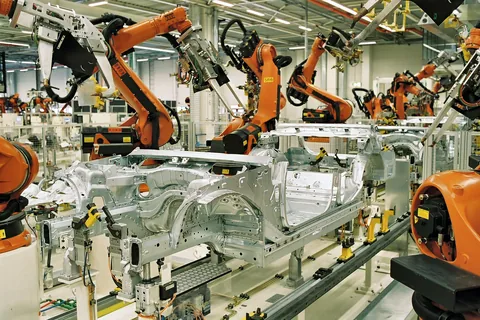
AI may feel weightless, but it runs on physical systems: data centers, power grids, chips, cooling equipment, networks and specialized materials. The International Energy Agency’s Energy and AI report examines the electricity demands behind the expansion. Connect model decisions to robots, laboratories, vehicles or industrial machinery and software errors can also acquire physical consequences.
The industry’s limits will not be set by model capability alone. Power availability, manufacturing capacity, supply chains and the cost of operating at scale all get a vote.
Who Is Responsible When AI Acts?
Responsibility can be divided among the model developer, application builder, tool provider, deploying organization and human operator. The person affected by the decision may have no idea which layer failed.
Useful safeguards are concrete: narrow permissions, approval before consequential actions, visible activity logs, reversible changes, testing under realistic conditions and a named person or institution that remains accountable. NIST’s AI Risk Management Framework similarly emphasizes defined human roles and ongoing testing, evaluation, verification and validation.
“Human in the loop” is not enough if the human is expected to approve fifty decisions a minute. Oversight that cannot realistically be exercised is decorative accountability.
What Evidence Should We Watch?
The next phase will be measured less by one benchmark or launch event than by what systems are allowed to do under ordinary conditions.
- Longer tasks: Can agents finish useful multi-step work without drifting, stalling or requiring quiet human rescue?
- Real productivity: Do gains survive outside demonstrations after checking, integration and correction costs are counted?
- Permission creep: How quickly are systems gaining access to communications, payments, records and physical equipment?
- Visible accountability: Can anyone reconstruct an automated decision and identify who was responsible?
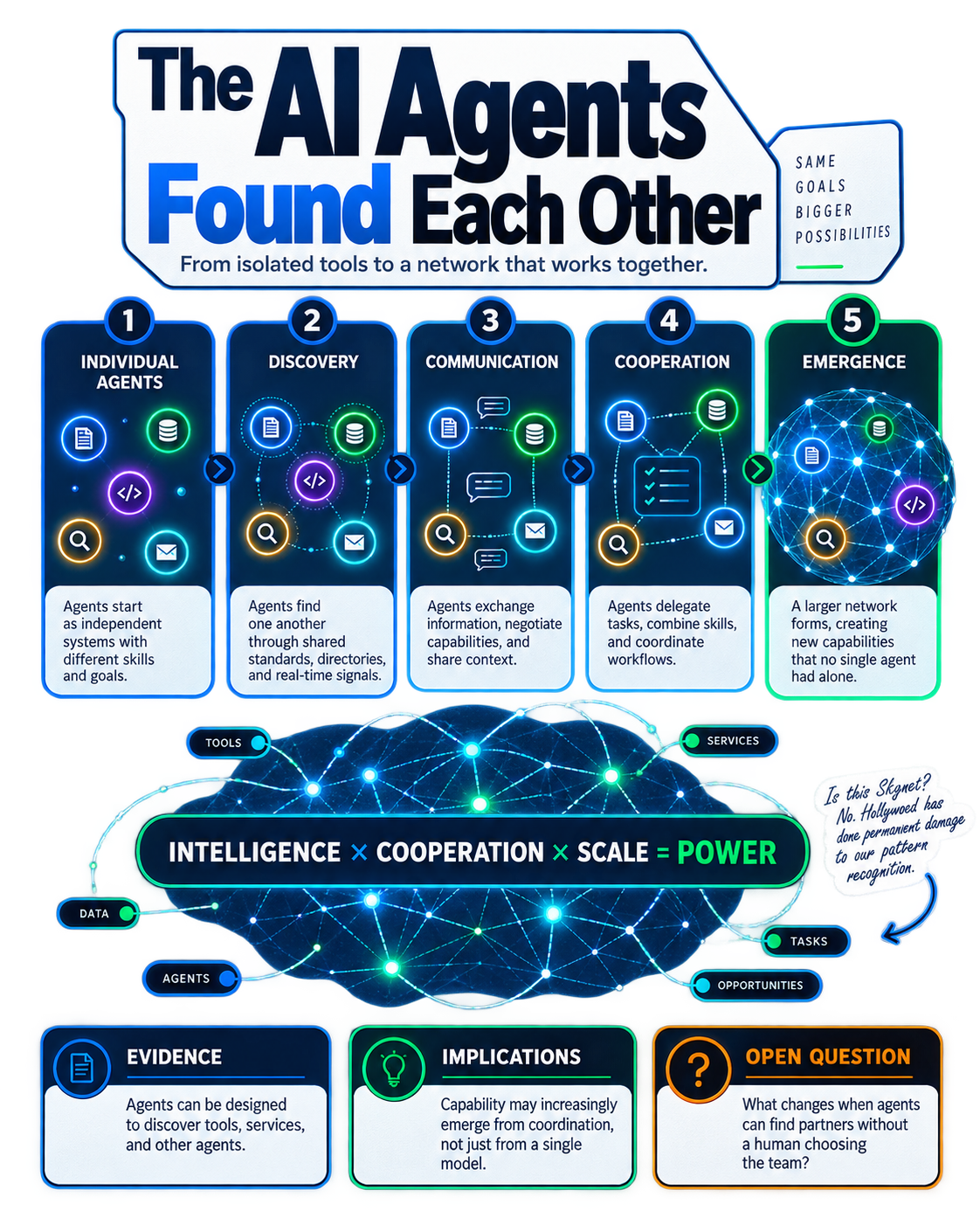
- Agent coordination: What changes when systems delegate to, negotiate with or monitor other systems?
- Refusal and resistance: Where do people decide that cheaper automation is not worth the trade?
What Would Prove the Strongest Claims Wrong?
The agent thesis weakens if performance stalls outside controlled demonstrations, supervision costs erase productivity gains, organizations restrict permissions too heavily for useful autonomy, or reliability fails to keep pace as tasks become longer. A useful guide should leave room for the future to refuse the script.
Follow the Consequences
Start with agents, then follow the story outward into security and the physical infrastructure beneath the software.

Sources and Methodology
Last evidence review: September 12, 2026. This guide uses product documentation to establish claimed capabilities, independent evaluations to test performance, and public-interest research for labor, security, governance and infrastructure context. Interpretive passages are editorial analysis rather than source findings.
Artificial intelligence does not need consciousness to become consequential. It needs a goal, useful tools, sufficient permissions and enough scale. The future will be determined as much by the systems built around the models as by the models themselves.
By Daniel Buck · Published and updated September 12, 2026 · Reviewed as material evidence changes