The Robotaxi Wars May Already Have a Winner: Nobody
Autonomous driving is breaking apart into cars, AI, fleets and platforms. That may be how it finally becomes an industry.
What the Internet Is Losing Its Mind Over
The Short Version
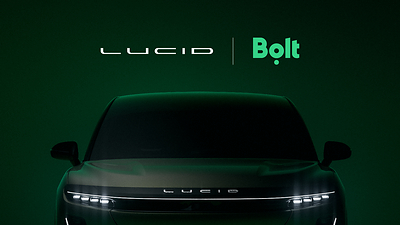
- Lucid and Bolt announced a strategic partnership aimed at deploying at least 25,000 Level 4 autonomous vehicles across Europe.
- Bolt intends to own and operate the fleet while Lucid provides the vehicle platform and NVIDIA Hyperion is expected to provide the autonomous-compute architecture.
- The larger story is structural: robotaxis are beginning to separate into specialized layers rather than requiring one company to build and operate everything.
- The 25,000 vehicles are a target, not a deployed fleet. No timetable or investment amount for reaching that target was disclosed.
The robotaxi may finally be becoming boring enough to become a business
For more than a decade, autonomous driving has been presented as a contest to build the machine that can drive itself. That was the spectacular part. The less spectacular question was what happens after the car can drive.
Who builds it? Who supplies the computer? Who develops the autonomy? Who owns 25,000 of them? Who maintains them, negotiates with cities, handles passengers and keeps the fleet moving at 2:13 on a rainy Tuesday morning?
Lucid and Bolt’s new European partnership begins to answer those questions. And the answer is increasingly: not the same company.
The robotaxi industry may commercialize not because one company finally solves autonomous transportation from top to bottom, but because companies stop trying to.
What Lucid and Bolt actually announced
On September 17, Lucid and Bolt announced a strategic partnership to develop autonomous mobility services in Europe. The companies say Bolt aims to deploy at least 25,000 fully autonomous Lucid vehicles across multiple European cities and countries.
The vehicles are planned around Lucid’s upcoming Midsize platform and are being designed for SAE Level 4 operation. The platform is expected to use NVIDIA Hyperion, which combines high-performance computing with a standardized sensor architecture.
Bolt’s role extends well beyond putting the cars in its app. Its autonomous-driving unit is expected to help define vehicle requirements, software, safety and rider-experience parameters, while building the fleet infrastructure, operating systems and city partnerships required for deployment. Bolt says it intends to own and operate the fleet.
That last sentence is where the press release stops being merely another robotaxi announcement.
What Level 4 means here
- The vehicle can perform the driving task without a human driver within defined operating conditions.
- It does not mean the vehicle can drive everywhere, under every condition, forever.
- The commercial problem therefore includes defining and expanding the places and conditions in which the system can operate reliably.
The autonomous-driving stack is splitting apart
The early robotaxi model encouraged vertical integration. Build the vehicle. Build the sensors. Build the driving software. Operate the fleet. Own the passenger relationship. Solve civilization before lunch.
The emerging model looks different.
Vehicle (Lucid)
→ Compute (NVIDIA Hyperion)
→ Autonomy (integrated technology partners)
→ Fleet (Bolt)
→ Market (cities + passengers)
The exact technology stack may evolve, but the economic architecture is already becoming more modular.
Bolt is already pursuing this model with other partners. It has announced European autonomous-driving work involving Stellantis and Pony.ai, while its broader ambition is to host 100,000 autonomous vehicles on its platform by 2035.
Lucid is doing the same from the other direction. Instead of treating its technology solely as something used to sell consumer cars, the company has created Lucid Technologies to commercialize its AI, autonomy, ADAS and digital systems more broadly.
This begins to resemble an ecosystem rather than a moonshot.
Industries mature by learning what not to do themselves
Aviation does not require one company to manufacture the aircraft, build the engines, operate the airport, run air-traffic control and sell you seat 22B.
The smartphone industry separated hardware, chips, operating systems, wireless networks, apps and distribution. Cloud computing separated servers from the businesses using them. Specialization allowed each layer to improve without every participant rebuilding the entire stack.
Robotaxis may be entering the same phase.
- VehicleBuild an autonomy-ready electric platform.Can it be manufactured cheaply and maintained at fleet scale?
- ComputeProcess sensor data and run driving systems.Can standardized hardware reduce integration cost?
- AutonomyPerceive, plan and drive.Can it meet safety and regulatory thresholds in defined domains?
- FleetOwn, charge, clean, maintain and dispatch vehicles.Can utilization become high enough to justify the capital?
- PlatformMatch riders with vehicles.Who owns demand and the customer relationship?
- City / regulatorAuthorize and govern deployment.What evidence is sufficient for commercial operation?
The crucial shift is conceptual. We have spent years asking whether the autonomous vehicle works. An industry has to answer whether the system around the autonomous vehicle works.
The real robotaxi race may be utilization, not intelligence
A privately owned car spends much of its life parked. A robotaxi earns its keep only when it is carrying passengers, repositioning efficiently or preparing for the next trip.
That turns autonomy into a fleet-economics problem. Vehicle cost matters. Energy efficiency matters. Maintenance matters. Cleaning matters. Insurance matters. Deadhead miles matter. Local regulation matters. And the cost of human intervention matters enormously.
The smartest robotaxi in Europe can still be a terrible business if it spends half the day waiting for someone to rescue it from situations the software cannot handle.
Stop asking how impressively the car drives in a demonstration. Ask how many paid autonomous miles it can deliver between human interventions, and what each of those miles costs.
That is where Bolt becomes interesting. It already operates mobility services across hundreds of cities. Fleet operations, customer demand, payments, support and city relationships are not side issues once autonomy leaves the laboratory. They are the business.
Twenty-five thousand robotaxis do not exist
The headline number deserves a large asterisk. Lucid and Bolt have announced a partnership and a deployment ambition. They have not disclosed a timetable for reaching 25,000 vehicles or the size of the investment required.
The vehicle itself will be based on Lucid’s upcoming Midsize platform. Regulatory approvals still have to be obtained. Technology partners still have to deliver. Cities still have to agree. Level 4 systems still have to prove they can operate safely inside the domains in which they are deployed.
So this is not evidence that Europe is about to wake up tomorrow beneath a gentle rain of driverless Lucids.
It is evidence that companies are beginning to organize themselves around the assumption that autonomous mobility could become a large commercial system.
That distinction matters. Press releases announce futures for a living. Industries have to build them.
Forget the demonstration. Watch the operating numbers.
- Paid autonomous miles: How much genuinely driverless passenger service occurs?
- Human interventions: How often does a remote or on-site human have to rescue the system?
- Fleet utilization: How many hours per day are the vehicles earning revenue?
- Cost per autonomous mile: Does removing the driver actually create attractive economics after compute, maintenance and supervision?
- Regulatory expansion: How quickly can approval move from one city and operating domain to another?
- Stack portability: Can Bolt mix vehicle and autonomy suppliers without rebuilding the business each time?
What the announcement does and does not mean
Is Bolt actually deploying 25,000 robotaxis?
Not yet. Lucid and Bolt announced a partnership with the aim of deploying at least 25,000 Level 4 vehicles across Europe. That number is a target, not an operating fleet.
The companies have not disclosed a timetable for reaching it or the investment required. The distinction is less glamorous than the headline, which is precisely why it matters.
When will the Lucid and Bolt robotaxis begin operating?
No public launch date was included in the announcement. The vehicles are expected to use Lucid’s upcoming Midsize platform, and commercial operation will also depend on technology integration, testing, city agreements and regulatory approval.
In other words, the partnership describes an intended industrial system. It does not yet provide a calendar for passengers.
What does Level 4 autonomous driving mean?
Level 4 means a vehicle can perform the entire driving task without a human driver inside defined operating conditions. Those conditions may be limited by geography, weather, road type, speed or other restrictions.
It does not mean the vehicle can drive everywhere under every conceivable condition. Autonomy still comes with boundaries, even when the press release arrives without them.
Who provides the self-driving technology?
Lucid is expected to provide the vehicle platform, while NVIDIA Hyperion is expected to provide the autonomous-compute and sensor architecture. Bolt intends to own and operate the fleet and contribute to vehicle requirements, software, safety and rider experience.
The final autonomy stack may include additional technology partners. That uncertainty is part of the article’s larger point: the system is becoming modular.
Why might a modular robotaxi industry work better?
Specialization allows vehicle manufacturers, chip companies, autonomy developers and fleet operators to concentrate on different layers of the business. No single company has to manufacture the car, solve autonomous driving, operate the fleet and acquire every passenger.
Modularity may reduce duplication and make deployment easier to scale. It may also multiply integration problems and complicate accountability. Every efficient ecosystem eventually discovers meetings.
Evidence, implications and open questions
- Evidence: A modular commercial architecture is forming. Lucid provides the vehicle platform, NVIDIA is expected to provide the compute architecture, Bolt intends to own and operate the fleet, and additional autonomy partners can occupy another layer.
- Implication: Robotaxis may become a platform business. If the stack modularizes successfully, the winners do not have to be the companies that solve every technical and operational layer themselves.
- Open question: Who captures the economics? The vehicle maker, autonomy developer, chip supplier, fleet owner and mobility platform can all be essential while fighting over the same passenger fare.
- Open question: Does modularity accelerate deployment or multiply failure points? Specialization can make an industry scalable. It can also make accountability delightfully complicated when six companies are involved and the car does something peculiar.
For fifteen years, autonomous-driving companies have tried to prove that the car can drive itself. The next phase is less cinematic: who owns it, who fixes it, who regulates it, who dispatches it and who gets paid.
The robot finally learned to drive. Naturally, capitalism handed it an org chart.
Editor’s Picks
 Artificial IntelligenceThe AI Agents Found Each Other
 AI SecurityOpenAI Technique in ‘Astra’ Model Sparks Security Concern
 InfrastructureAI Needs So Much Electricity That SpaceX Is Getting Into Metallurgy
 RoboticsCars Are Becoming a Bad Business. So Automakers Are Building Humans.
 RoboticsThe Robot Can Run Faster Than Usain Bolt. Can It Plug In Your Car?
 New TechnologyWhat Comes After the Demonstration?