The artificial intelligence industry has discovered a remarkable way to make computers do more work with less effort. Unfortunately, nobody has taught a power transformer to manufacture itself.
That may be the defining contradiction of the AI boom: demand can accelerate at software speed, while the electricity system still operates on the schedules of factories, construction crews, regulators and equipment manufacturers. The next great constraint on artificial intelligence may not be intelligence at all. It may be delivery.
The Shift: Demand Is Moving Faster Than Infrastructure
In its 2025 Energy and AI report, the International Energy Agency estimated that data centers consumed 415 terawatt-hours of electricity worldwide in 2024, about 1.5% of global electricity consumption. Its base-case projection rises to approximately 945 TWh by 2030. This is a modeled scenario, not a meter reading from the future. AI is the largest projected driver, but ordinary digital services contribute too.
America's exposure is particularly concentrated. A 2026 Lawrence Berkeley National Laboratory update estimated that data centers could account for 11.8% of U.S. electricity consumption in 2030 in its central estimate, with a scenario range of 9.5% to 15.3%. Those percentages describe all data centers, not AI alone.
There is a geographical catch. Electricity may be available somewhere in the country without being deliverable to the precise location of a proposed data center. The national energy total can look manageable while a regional substation faces an entirely different arithmetic.
The Mechanical World Has a Calendar
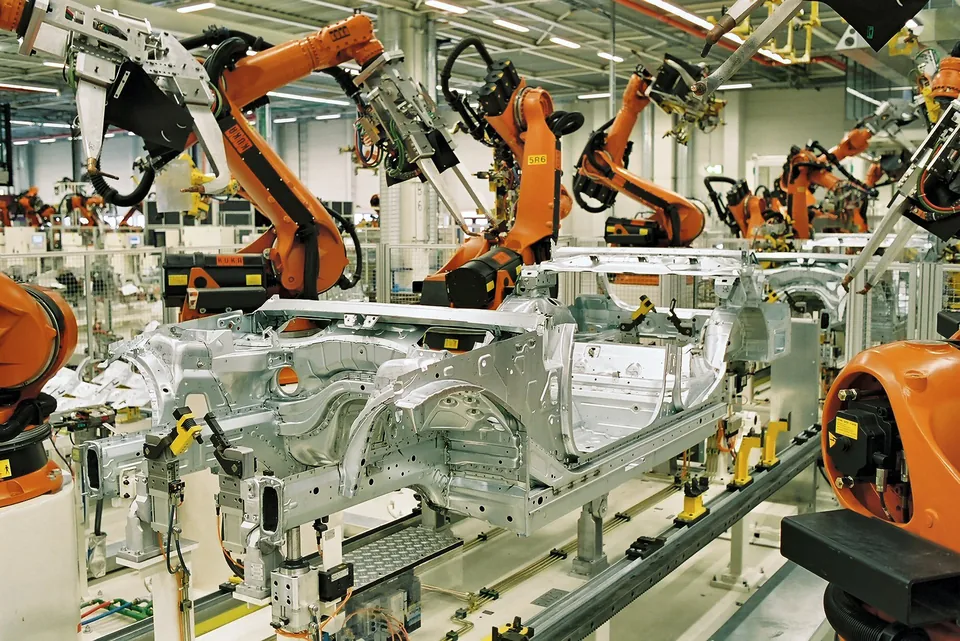
Software can be distributed almost instantly. Transformers cannot. The IEA reported that new transmission lines in advanced economies can take four to eight years to build and that waits for critical components such as transformers and cables had doubled over the preceding three years. It estimated that roughly 20% of planned data-center projects could face delays unless grid-related risks are addressed.
The pressure is not purely hypothetical. Reuters reported in July 2026 that lead times for some high-voltage transformers had reached 160 weeks, while utilities and developers were ordering years ahead, refurbishing equipment and negotiating long-term supply agreements. These are reported market conditions for particular equipment, not universal delivery times.
And escaping the grid does not necessarily escape the bottleneck. A company that proposes its own gas-fired generation still needs turbines, fuel infrastructure, switchgear, cooling, skilled workers and permits. The IEA says gas turbine deliveries for new power plants can take several years. One can relocate the queue without abolishing it.
Jevons Arrives at the Data Center
In the nineteenth century, William Stanley Jevons observed that improvements in the efficiency of coal-powered steam engines could increase, rather than decrease, total coal consumption. More efficient machinery made coal-powered production attractive for more purposes.
That logic deserves attention in AI. A cheaper inference task may encourage companies to deploy AI in more products, run more queries, automate additional processes and develop applications that were previously uneconomical. The energy required per task can fall while total energy use rises.
Researchers Alexandra Sasha Luccioni, Emma Strubell and Kate Crawford explore this possibility in a 2025 paper on AI efficiency and rebound effects. But Jevons is a mechanism to investigate, not a universal law. Total demand also depends on prices, adoption, budgets, competing technologies and the efficiency of the entire system. A rebound effect is plausible; its eventual magnitude is not established.
The Digital Dynamics Brief
One sane email about an excitable industry.
The Malthusian Twist
Thomas Malthus worried about population outrunning food supply. The AI variation is stranger. Improvements in the technology may generate demand for still more of the physical resources needed to operate it. More capable models create new uses; new uses encourage new data centers; those centers require more electricity and equipment.
Yet the analogy has limits. Electricity supply is not a fixed field of crops. Manufacturers can add shifts and factories, grids can be expanded, computing can become more efficient, workloads can move, and prices can suppress marginal demand. The constraint is not necessarily an absolute shortage of energy. It may be a mismatch between the timing of demand and the timing of supply.
That is a subtler and more useful problem than declaring that AI will run out of power.
The Bottleneck Can Move
Suppose turbine production expands. Transformers may still be scarce. Suppose transformers arrive. The local transmission network may need reinforcement. Suppose the wires are ready. Water, cooling, construction labor, semiconductor capacity or commercial returns may become decisive.
This is the supply-chain version of a relay race in which every runner has to wait for the previous runner to manufacture the baton.
And money alone cannot eliminate every delay. Financing a new factory is not equivalent to commissioning one. A corporate announcement is not a completed power plant. A gigawatt requested in a utility queue is not a gigawatt connected to the grid.
The difference between announced capacity, contracted capacity, energized capacity and actual electricity consumption should become a standard part of AI reporting. Treating them as interchangeable turns an infrastructure forecast into a promotional brochure.
What Could Prove This Argument Wrong?
A serious investigation must be willing to lose its own argument. Several developments could soften the mismatch:
- Faster efficiency gains: Better chips, models and utilization could reduce electricity requirements relative to forecasts.
- Slower commercial adoption: If AI products cannot earn sufficient returns, companies may postpone or cancel capacity plans.
- Smarter grid operations: The IEA estimates that applying digital grid-management tools could unlock substantial transmission capacity without building equivalent new lines.
- Flexible siting and operation: Locating facilities where power is available, shifting some workloads, and using storage or onsite generation could reduce local pressure.
- Industrial expansion: Higher equipment prices and dependable orders could justify more manufacturing capacity, eventually shortening lead times.
Indeed, the IEA's 2025 scenarios put global data-center electricity use in 2035 anywhere from about 700 to 1,700 TWh. That wide range is a warning against pretending the trajectory has already been settled.
The Consequences Beyond Silicon Valley
If the bottleneck persists, it may affect more than the construction dates of giant data centers. Utilities must decide who pays for upgrades and who bears the risk if projected demand never materializes. Manufacturers and households may compete for grid capacity in constrained regions. Policymakers may face difficult choices among industrial expansion, affordability, reliability and emissions.
There is also an unexpected distributional question. The largest technology companies can reserve equipment early, negotiate long-term contracts and finance dedicated generation. Smaller businesses and utilities may have fewer ways to jump the queue. The economic advantage of scale could migrate from software into physical infrastructure.
That does not prove consumers will inevitably face higher bills. Electricity rates depend on local regulation, cost allocation, generation, transmission and how new facilities are financed. It does mean that the details of utility agreements matter far more than the rhetoric of an AI investment announcement.
What We Should Watch Next
Forget counting press releases. Follow measurable indicators:
- Transformer and turbine delivery times.
- Completed versus announced data-center projects.
- Grid connection dates and regional power prices.
- Construction and equipment costs.
- Actual utilization and revenue earned per unit of computing capacity.
We should also ask whether cheaper AI produces more total consumption, and how quickly efficiency gains are absorbed by expanding use. Those measurements will tell us whether Jevons is operating strongly, weakly or not at all in particular markets.
The Future Still Needs a Factory
The most consequential AI limitation may turn out to be neither a flaw in the models nor a shortage of human imagination. It may be the inability to make the physical world move at the pace promised by the digital one.
The optimistic case is that AI helps improve engineering, grid operations and industrial production fast enough to ease its own constraints. The pessimistic case is that every improvement opens another profitable use, sending demand toward the next bottleneck. Both are plausible. Neither is destiny.
The real story is not that the future has stopped arriving. It is that the future has joined the construction queue.
Research Notes and Source Standards
This investigation draws on the IEA's 2025 Energy and AI report, Lawrence Berkeley National Laboratory's 2026 U.S. data-center update, Reuters' July 2026 equipment-supply reporting, and research on rebound effects. Forecasts and scenarios are explicitly identified as such. The thesis about a moving supply-chain bottleneck is Digital Dynamics analysis, not a demonstrated universal law.
Frequently Asked Questions
Can AI become more efficient while using more electricity overall?
Yes. Falling energy use per task can coincide with expanding use. The eventual size of this rebound effect depends on adoption, prices, budgets and system efficiency.
Does building onsite power remove the bottlenecks?
It can change them. Dedicated generation still requires equipment, fuel infrastructure, cooling, workers and permits.
Are electricity-demand forecasts guaranteed outcomes?
No. They are estimates or scenarios. Efficiency gains, commercial adoption, siting decisions and industrial expansion can change the result.